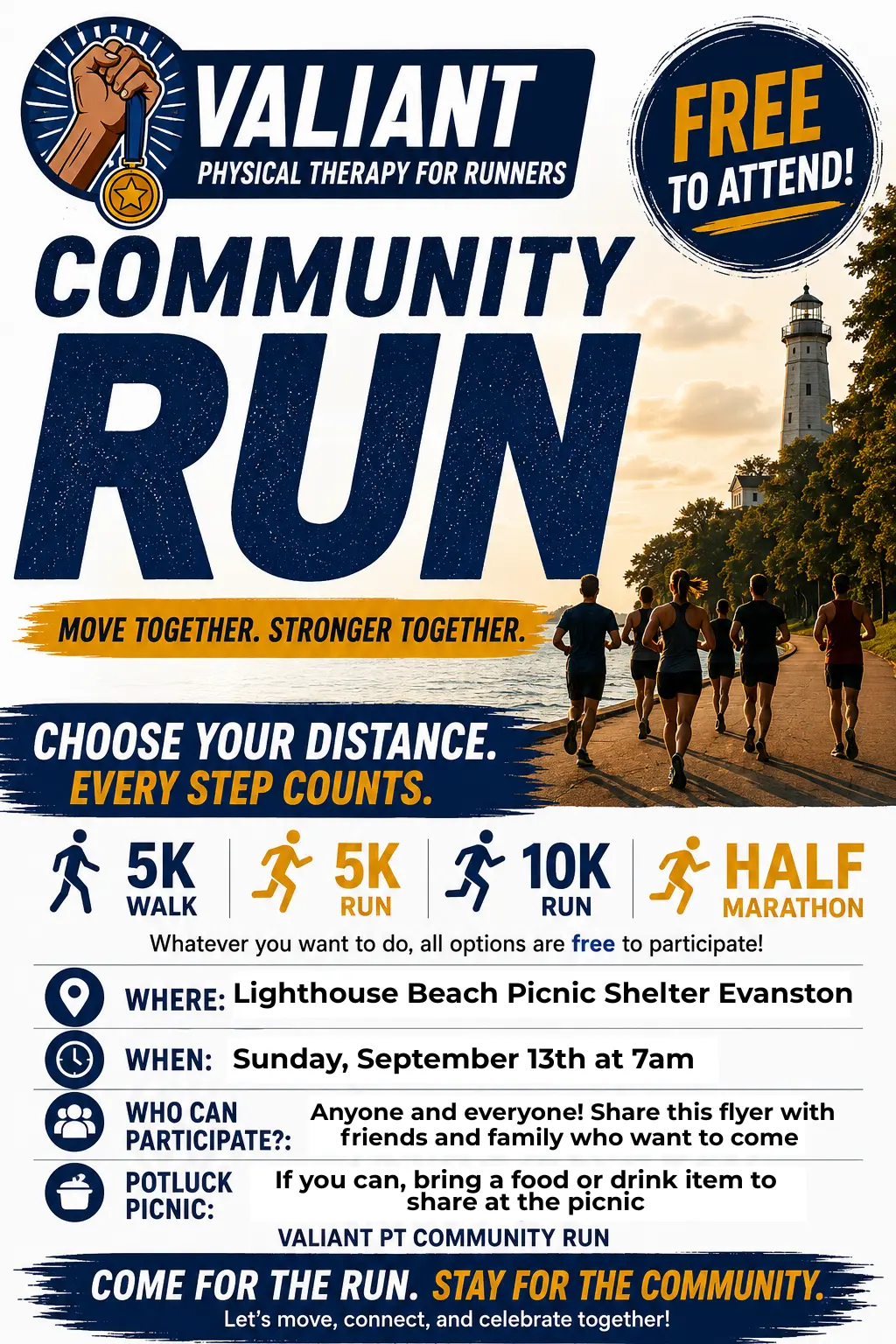
THIS SUNDAY: RUN WITH THE VALIANT PT COMMUNITY!
This Sunday, we’re getting together for the FREE Valiant PT Community Run, and there’s still time to join us! Run it, walk it, or simply come out for a fun…

Reading Time: 2mins
The other day, I was talking with a friend of mine who is getting into running. Back in the day, he used to run track and loved the 1 mile and anything shorter. The fast stuff.
So as he’s been running more as an adult, he’s been sprinkling in some of his fast efforts into his runs. He told me that the other day he did a mile in 6:05 min/mile! That’s fast!
Then he thought maybe he could try to run that pace for a 5K. I asked him, what’s your current 5K time? He said he hasn’t ran a 5K yet. He’s just done the 1 mile efforts and trying to do them fast.
I proceeded to pop his bubble and let him know that trying to run a 5K with an average pace of 6:05 min/mile when hasn’t yet completed a 5K is a DANGEROUS idea.
That might sound obvious to a lot of you reading this. But runners actually do this kind of thing, to a lesser degree, all the time.
We set targets/goals for ourselves based on ideas and numbers that sound cool. Whereas our physical bodies can realistically handle a different level. And pushing past the body’s physical limits usually leads to injuries in training.
The first time you run any distance, your goal is simple:
finish it.
Don’t get me wrong. Striving for your best self, pushing your limits, mentally and physically, are honorable goals that I hope to encourage my patients and clients to achieve.
However, we do have to be smart and, dare I say…realistic.
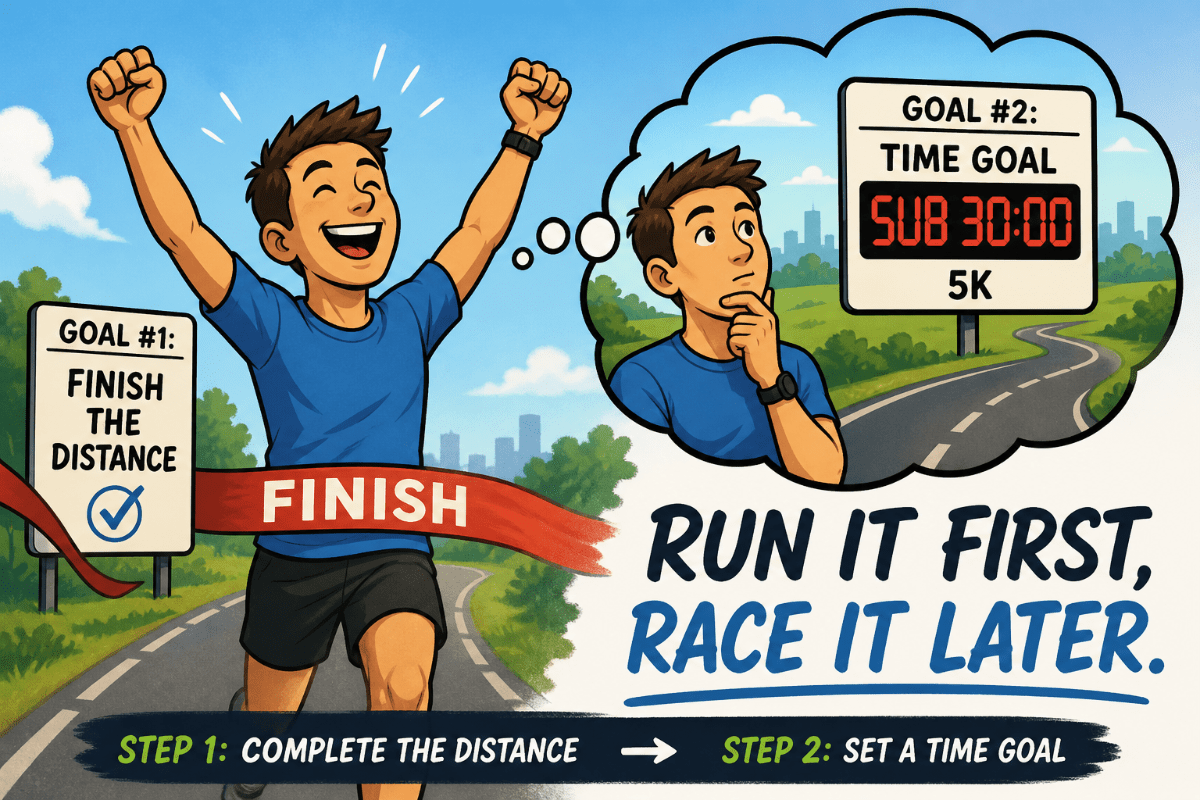
The first time you complete any particular distance, I recommend you set your goal on simply completing the distance. Just try to finish. Don’t incorporate any sort of time goal for your first time completing a distance you’ve never ran/raced before.
Once you’ve established a baseline for a given distance, a PR if you will, then you can try to aim for a time/pace goal. Based on what you already did.
If I complete my first 5K in 32:47 seconds, I can shoot for a sub 30 minute 5K the next time. That’s reasonable and realistic.
If I try to run a 5K with a 6:05 average for my first 5K, I’m looking at an 18:54 5K. If I’ve never ran a 5K before, it would be ridiculous and dangerous to try to achieve that time for my first 5K.
Run the distance first for completion, set your baseline, then you can attach a performance metric to it for the next time.
That’s a reasonable and fun way to approach these races and training.
Your best is yet to come!
Dr. Michael
Valiant Physical Therapy
Evanston, Illinois
Physical therapy for Runners | Sports Rehab